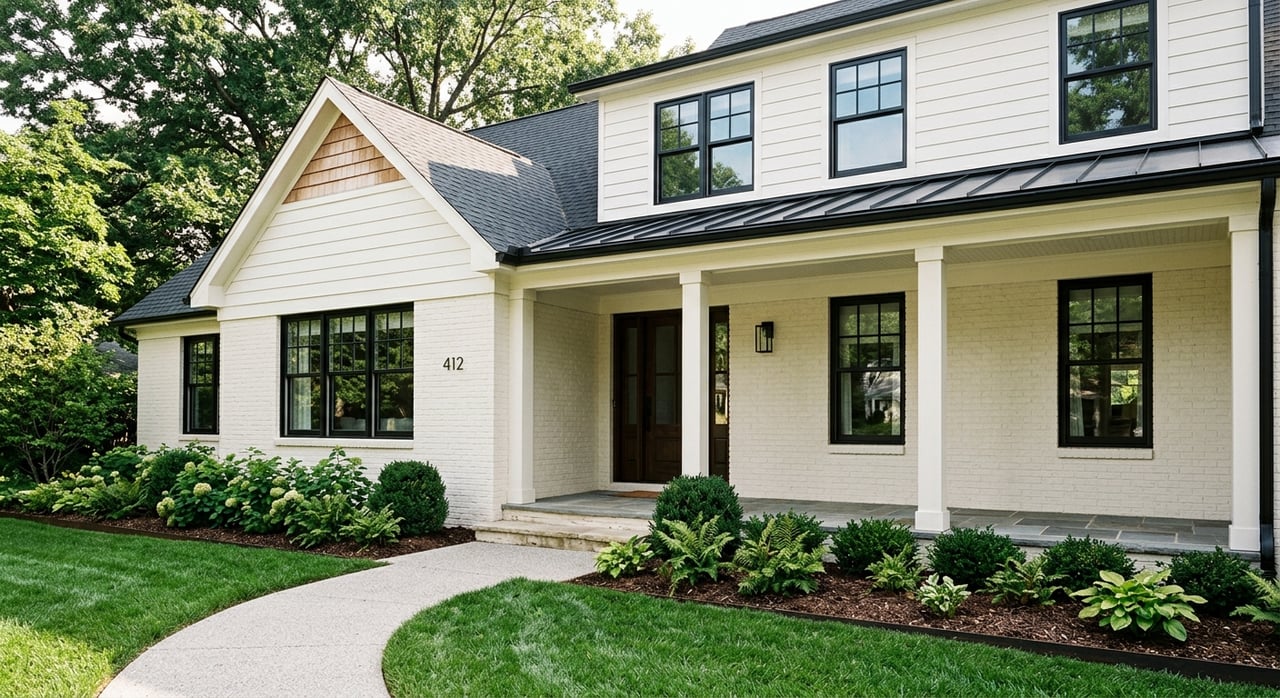
If you are trying to figure out where to live in Gainesville, it helps to know that this market is not just one thing. You will find older in-town homes, historic districts, newer redevelopment near downtown, outer subdivisions, and lake-adjacent options that can feel very different from one another. This guide will help you understand the home styles, neighborhood patterns, and practical tradeoffs so you can narrow your search with more confidence. Let’s dive in.
Gainesville Housing at a Glance
Gainesville offers a wide range of housing choices in a relatively compact area. The city’s historic downtown, established neighborhoods, redevelopment south of the square, and access to Lake Sidney Lanier all shape what buyers see on the market.
The numbers also hint at a different mix inside the city compared with Hall County overall. Gainesville’s 2020 to 2024 median owner-occupied home value was $382,200, compared with $350,400 for Hall County, while the city’s owner-occupied rate was 39.2% versus 68.6% in the county. That suggests Gainesville proper likely has a denser and more renter-heavy housing mix than the county as a whole.
If commute matters, Gainesville can be practical for many buyers. Mean travel time to work was 24.0 minutes in Gainesville and 27.3 minutes in Hall County. Hall Area Transit also serves Gainesville-Hall County through WeGo and the Gainesville Trolley, connecting riders to jobs, medical offices, groceries, government offices, retail, recreation, and other destinations.
Older Gainesville Home Styles
If you love character, Gainesville has real variety. The city’s historic preservation work documented more than 2,000 historic and potentially historic properties, which shows just how deep the older housing stock runs.
In the north and east of downtown survey area, the most common house types were bungalows, English Cottages, and Ranch Houses. Craftsman was the most common style, followed by English Vernacular Revival, Colonial Revival, and Folk Victorian. In simple terms, that means Gainesville’s older homes are not all grand historic properties. Many are modest, practical homes built for working- and middle-class households.
That variety can be a plus if you want charm without needing a large estate-style property. You may find front porches, original detailing, compact footprints, or mid-century layouts depending on the block and the era of construction.
Historic District Rules Matter
If you are drawn to an older home, historic status is one of the first things to verify. In Gainesville, local designation matters more for renovation rules than a National Register listing alone.
The city says local designation requires a certificate of appropriateness for major exterior work. By contrast, National Register listing by itself does not prevent incompatible changes or demolition. For you as a buyer, that means two homes with similar history may come with very different renovation limits.
This is especially important if you plan to update windows, siding, porches, additions, or exterior materials. Before you fall in love with a property, it is smart to confirm whether it is locally designated, how that district is regulated, and whether your plans fit the approval process.
Green Street and Nearby Areas
Green Street is one of Gainesville’s best-known historic corridors. It stretches about a half mile and features 19th- and 20th-century Victorian and Neoclassical residences and businesses.
The city survey describes the area as having some of the most elaborate architecture in the survey area, including Neoclassical Revival, English Vernacular Revival, Colonial Revival, and Queen Anne. Today, some former houses now function as offices or retail space, so the feel can be different from a purely residential street.
For buyers, Green Street is often more about architecture, location, and setting than one single neighborhood experience. It also sits near I-85 and I-985, which can be useful if highway access is part of your decision.
Ridgewood
Ridgewood is one of Gainesville’s oldest residential areas and connects Green Street with Rock Creek, Ivey Terrace, and Wilshire. The city describes it as a traditional residential neighborhood with sidewalks on both sides of the street.
Its major building period runs from the 1920s through the 1950s. If you want an established in-town feel, mature streetscape, and a more classic neighborhood pattern, Ridgewood may be worth a closer look.
Candler-Boulevard-Park-Prior
This area includes homes from the late 19th century through the 1950s. The survey notes examples of Folk Victorian, Colonial Revival, Neoclassical Revival, Craftsman, and English Vernacular Revival styles.
It also points out that bungalow, English Cottage, and Ranch House are the most common house types there. Some newer townhouse infill exists as well, and the survey notes that some of it is out of scale with the historic district. For buyers, that means the streetscape can vary more from property to property.
Newer Homes and Infill Options
If you prefer a newer home, Gainesville is not limited to outer subdivisions. The city describes the Midland Greenway as the centerpiece of redevelopment south of the historic square, and city history notes that this area brought new apartments and restaurants near downtown.
That creates an interesting mix for buyers. You can compare older in-town neighborhoods, redevelopment close to downtown, and newer subdivision housing without leaving the broader Gainesville market.
Some listings may also look newer than the surrounding homes because they are infill builds or rebuilds rather than true subdivision new construction. That difference matters because lot dimensions, zoning, and surrounding property patterns can affect privacy, parking, future changes nearby, and overall fit.
How to Compare Neighborhood Options
The best Gainesville neighborhood for you usually depends less on a neighborhood name and more on your daily priorities. A historic bungalow near downtown, a newer home in a developing area, and a lake-adjacent property may all serve very different goals.
A few filters can help you compare options more clearly:
- Historic-district status if you want flexibility for exterior changes
- Renovation tolerance if you are open to projects or older systems
- Lot size and frontage if yard use or future improvements matter
- Flood-zone exposure if you are considering creek, low-lying, or lake-related locations
- Commute route if easy access to work or highways is important
- Lake-access type if your goal is lakefront, lake-access, or simply lake-adjacent living
When you use these filters early, you can avoid spending time on homes that look appealing online but do not match how you actually want to live.
Lake Lanier Area Living
Lake Sidney Lanier is one of Gainesville’s biggest lifestyle drivers. The city says the lake has more than 690 miles of shoreline across five northeast Georgia counties, along with 76 recreation areas, 10 marinas, and more than 20 access points.
Gainesville also notes that five city parks provide public access to the lake: Holly Park, Longwood Park, Lanier Point Athletic Complex, Lake Lanier Olympic Park, and Laurel Park and Mega Boat Ramp. That means you do not always need a waterfront home to enjoy the lake lifestyle.
For many buyers, the key question is not just “Is it near the lake?” but “What kind of lake relationship does this property actually have?” There is a real difference between lakefront, lake-access, and lake-adjacent.
Lakefront vs Lake-Access vs Lake-Adjacent
Here is a simple way to think about it:
| Option | What it usually means | What to verify |
|---|---|---|
| Lakefront | The property directly borders the lake | Flood-zone details, utilities, lot usability |
| Lake-access | The property has some form of access nearby or through a community feature | Exact access type, distance, and practical use |
| Lake-adjacent | The property is near the lake but does not necessarily have direct access | Whether proximity matches your actual lifestyle goals |
This matters because a property can market a “lake lifestyle” while offering a very different day-to-day experience than you expected. Public access, distance to launch points, and lot conditions all play a role.
The city’s blueways and parks information also shows the active side of this area. Boating, fishing, kayaking, and paddling are common draws, but the city notes that swimming is not recommended at some launch areas because there are no lifeguards and motorboat traffic can be heavy in summer. It is a great lifestyle fit for many buyers, but it helps to understand how you would actually use it.
Public Records Can Save You Time
In Gainesville, public mapping tools can tell you a lot that a listing description may not. Hall County’s GIS Viewer includes parcels, zoning, subdivision lots, flood zones, utilities, and future land use layers. qPublic adds parcel, assessment, and sales data that are updated weekly.
Gainesville’s public maps also include the New Construction Activity Map, Future Land Use Map, Midtown Overlay Boundary, Local Historic Districts, and North Oconee Watershed Protection District. These tools can help verify whether a home is truly new construction, an infill rebuild, or simply newer to the market.
This is especially useful when comparing neighborhoods that are changing quickly. A charming street may sit near planned redevelopment, overlay boundaries, or watershed protections that affect what happens next.
Permits, Zoning, and Lot Questions
If you are comparing homes with renovation potential or considering newer construction, permit history and zoning deserve attention. The city says permits are required for construction, repair, and alteration work.
The county’s plat-review packet also notes that zoning affects subdivision rules and that Hall County will not approve a subdivision that creates a landlocked parcel. That may sound technical, but it has practical value for buyers because lot shape, frontage, and access can affect future use more than photos suggest.
Hall County also reported 1,996 building permits in 2025, which points to continued development pressure countywide. In a growing market like this, it is worth checking how a property fits into the surrounding land-use pattern before you make a move.
What This Means for Your Search
Gainesville works well for buyers who want options. You can look at classic in-town homes with character, established neighborhoods with sidewalks and older trees, newer redevelopment near downtown, or lake-area properties tied to outdoor recreation.
The best fit usually comes down to how you want to balance style, maintenance, location, and future flexibility. An older home may offer charm and central location, while a newer build may offer a simpler upkeep path. A lake-adjacent property may support your weekends, but only if the access and lot conditions match your plans.
If you want help sorting through those tradeoffs, working with a local team can make the process feel much clearer. PURE Real Estate Solutions helps buyers and sellers across North Georgia navigate home search, valuation, financing support, and next-step planning with steady guidance and practical local insight.
FAQs
What home styles are common in Gainesville, Georgia?
- In Gainesville’s older in-town areas, common house types include bungalows, English Cottages, and Ranch Houses, while common styles include Craftsman, English Vernacular Revival, Colonial Revival, and Folk Victorian.
What should you know about historic homes in Gainesville?
- You should verify whether a home is locally designated in a historic district, because local designation requires approval for major exterior work, while National Register listing alone does not create the same level of restriction.
Which Gainesville neighborhoods have older homes?
- Green Street, Ridgewood, and the Candler-Boulevard-Park-Prior area are all known for older housing stock and a mix of historic architectural styles.
Are there newer homes near downtown Gainesville?
- Yes. Gainesville has redevelopment south of the historic square, including activity around the Midland Greenway, which adds newer housing options near downtown.
What is the difference between lakefront and lake-adjacent homes in Gainesville?
- Lakefront homes directly border Lake Sidney Lanier, while lake-adjacent homes are simply near the lake and may not offer direct access, so you should confirm the actual access type and lot usability.
How can you research a Gainesville property before buying?
- You can review Hall County public mapping tools for parcels, zoning, flood zones, utilities, future land use, and subdivision details, and use city maps to check local historic districts, overlays, and new construction activity.