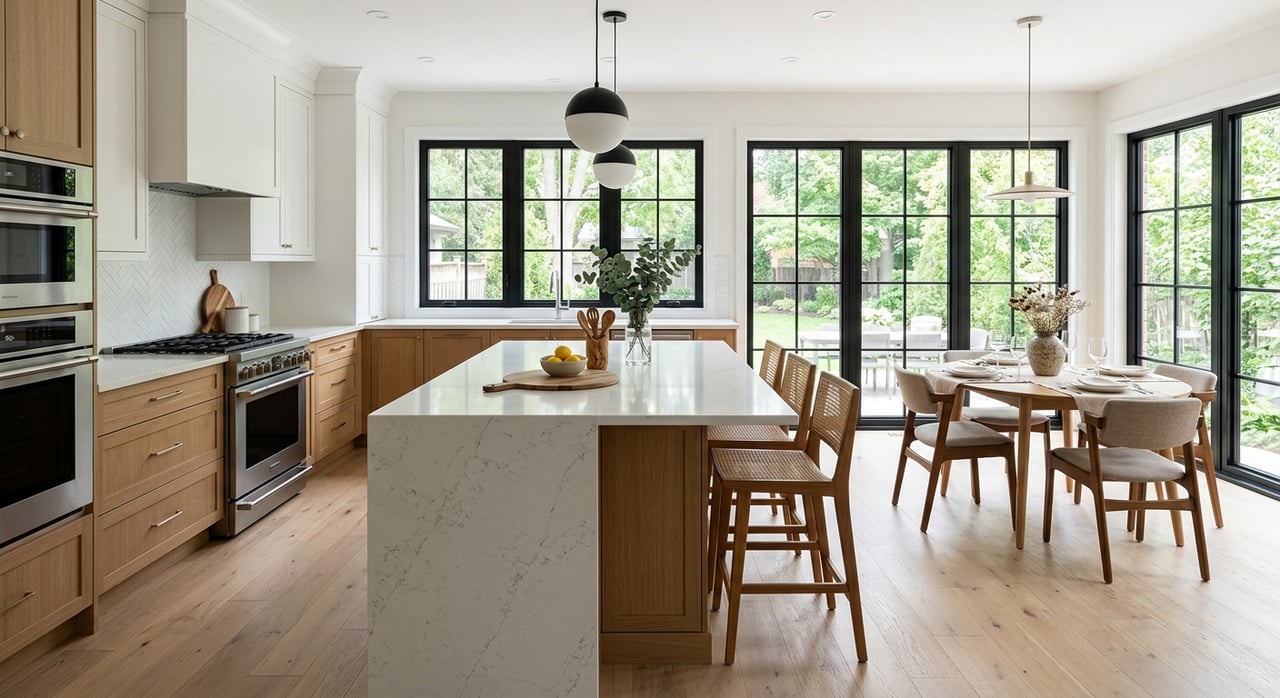
If you are home shopping in Buford, one question can shape your whole search fast: should you buy brand-new or go with a resale home? It is a smart question, especially in a market where both options can make sense depending on your budget, timeline, and goals. In this guide, you will see how new construction and resale homes compare in Buford, where the biggest tradeoffs tend to show up, and how to narrow the right fit for your next move. Let’s dive in.
Why Buford attracts both buyers
Buford offers a mix that appeals to many buyers. The city highlights convenient access to the Mall of Georgia, downtown shops and restaurants, Lake Lanier, and a location about 45 minutes north of downtown Atlanta. That combination helps explain why both planned new communities and established resale neighborhoods continue to draw attention.
Buford’s long-term planning also matters. The city’s 2045 Comprehensive Plan focuses on future growth, land use, transportation, housing, economic development, and quality of life. For you as a buyer, that means new construction in Buford is often part of a broader planned-community setting with regulated infrastructure, not just a single new home on its own.
New construction in Buford
New construction in Buford covers a wide price range, and that is important to understand before you compare it to resale homes. Current market pages show townhomes starting in the high $300,000s, while many new single-family homes start in the low-to-mid $500,000s and extend into the $600,000s and $700,000s. Research also shows that pricing can vary depending on how the market slice is defined, with one citywide new-home median list price at $725,000 and a broader 30519 new-home median list price at $535,000.
In practical terms, new construction in Buford often means newer layouts, community amenities, and a more predictable condition at move-in. It can also mean waiting for completion, depending on the builder and stage of construction. Some homes are available now, while others may still be months away.
Current new-home examples
A few current examples help show the range:
- Towns at Ivy Creek offers townhomes in Buford 30519, with listed homes from $381,900 to $397,900 and plan pricing starting at $408,910.
- Arbors at Richland Creek offers single-family homes in Buford 30518 from $525,000 to $737,000.
- The Paddocks at Doc Hughes starts at $618,990 for single-family homes.
- Greyton Springs Place is a newer townhome community near Mall of Georgia Boulevard with access to I-85, I-985, and Highway 20.
These examples show why the phrase “new construction in Buford” can mean very different things depending on whether you are looking for a townhome entry point or a larger single-family home.
Main advantages of new construction
New construction usually stands out in three areas: choice, efficiency, and predictability. If you buy early enough in the process, you may have more room to personalize finishes and design selections. Ashton Woods, for example, specifically notes personalized design selections in its Buford offerings.
A newer home can also mean less immediate upkeep. Builder messaging in Buford communities highlights low-maintenance living, and Beazer shows estimated average energy bills of about $104 to $131 per month on select plans. While every home is different, lower maintenance needs and energy efficiency are common reasons buyers lean toward new construction.
Main tradeoffs of new construction
The biggest tradeoff is often timing. In Buford, new construction can mean move-in ready inventory, homes under construction, or availability several months out. That matters if you need to move quickly or if your current home sale creates a tighter schedule.
Price is another factor. While townhomes can open the door in the high $300,000s, many new single-family options start above where some resale homes begin. You may be paying for a newer layout, a more current finish package, and a planned-community setting, but that does not automatically make it the better fit for every buyer.
Resale homes in Buford
Resale homes in Buford offer a broader spread of prices and property types. Active resale inventory in 30519 includes examples at $325,000, $349,500, $415,000, $445,000, $499,900, $599,900, $750,000, and $1,000,000. Redfin also reports a citywide median sale price of $567,000 in March 2026.
That wide pricing range gives you more room to search by budget first. It also means resale homes can vary a lot in age, updates, lot characteristics, and neighborhood setting. Two homes at similar prices may offer very different value depending on condition and location.
Where resale demand often shows up
Popular neighborhood mentions can help frame where established demand tends to be strongest. Current market pages flag Hidden Falls, Andover, and Downtown Buford as popular areas. If you are drawn to a more established setting, those kinds of neighborhoods may be worth watching as you compare options.
Resale can also be appealing if you want a home that is available now. Unlike a build timeline that may stretch out, resale homes are usually already complete and ready for inspections, negotiations, and closing based on the seller’s timing.
Main advantages of resale homes
Resale homes in Buford tend to be strongest on immediate availability, established neighborhoods, and wider price dispersion. If your budget is tighter, resale may give you more entry points, especially in the low-to-mid $300,000s. That can be important for first-time buyers or early move-up buyers who want to stay flexible.
Resale homes may also offer a different balance of lot size, neighborhood feel, or square footage at a given price. In some cases, you may find more house for the money compared with a brand-new property. The tradeoff is that condition and update needs can vary much more from one home to the next.
Main tradeoffs of resale homes
With resale, the biggest unknown is usually condition. An older home may need updates sooner, and maintenance costs may be less predictable than in a new build. Even when a resale home looks move-in ready, you still want to look closely at systems, age, and past upkeep.
You may also have fewer chances to get exactly the finishes or layout you want. Instead of picking selections, you are choosing from what already exists. For some buyers, that is perfectly fine. For others, it can mean budgeting for future changes.
Where prices overlap most
For many Buford buyers, the real comparison happens in the mid-$500,000s. Research suggests this is where renovated or well-positioned resale homes and newer builder product can compete most directly. If you are shopping in that range, the decision often becomes less about price alone and more about which tradeoffs matter most to you.
At that level, a resale home may offer a more established neighborhood or different lot characteristics. A new home may offer a more current floor plan, less near-term maintenance, and a more predictable move-in condition. Neither option is automatically better. The right answer depends on how you want to live and what kind of move feels manageable.
School zoning deserves extra attention
In Buford, school assignment is highly address-specific. That is especially important because Buford City Schools is a separate district from Gwinnett County Public Schools. Some communities feed into the Seckinger Cluster, and builder pages may list those assignments for specific neighborhoods.
For example, Towns at Ivy Creek is zoned to Seckinger High School. That does not mean nearby homes will have the same assignment, even within the broader Buford area. Before you make a final decision, verify the exact school zoning tied to the specific property address you are considering.
Infrastructure and maintenance matter too
When you are comparing homes, it helps to think beyond the front door. Buford’s development regulations require new subdivision streets to meet city standards and define maintenance responsibility for private roadways. In simple terms, some new communities come with clearer infrastructure standards and defined maintenance structures, which can be a real plus.
At the same time, not every neighborhood works the same way. Whether you buy new or resale, it is wise to confirm any lot-level or community-level maintenance responsibilities before you commit. Details like road maintenance or shared amenities can affect both your costs and your day-to-day experience.
How to decide which path fits you
If you are trying to make the call, start with the basics that affect your move most:
- Budget: Resale may offer lower starting price points, while new construction often commands a premium for newer finishes and lower upkeep.
- Timeline: Resale is often the better fit if you need to move sooner. New construction can range from immediate occupancy to a longer wait.
- Condition: New homes tend to offer more predictability. Resale homes may offer value, but condition varies more.
- Customization: Early-stage new construction gives you the most design input. Resale gives you what is already there.
- Neighborhood feel: Resale often means more established surroundings. New construction often means a planned-community environment with newer infrastructure.
If you are a first-time or early move-up buyer, the choice may come down to whether you want a lower entry price or a lower-maintenance home. If you are a move-up buyer, the decision is often about lot, location, square footage, and updates versus layout, efficiency, and near-term predictability.
The bottom line for Buford buyers
Buford gives you real options on both sides of the market, and that is a good thing. New construction is often strongest on modern layouts, energy efficiency, and a more predictable ownership start. Resale is often strongest on faster availability, established neighborhoods, and a broader range of prices.
The best choice depends on your budget, timing, and tolerance for future projects. If you want help comparing a brand-new community against resale options in the same price range, the clearest next step is to review them side by side with local guidance. When you are ready to make your move in Buford, connect with PURE Real Estate Solutions for clear, supportive guidance from search to closing.
FAQs
Is new construction more expensive than resale in Buford?
- Often, yes. Buford resale homes can start in the low-to-mid $300,000s, while new townhomes often begin in the high $300,000s and many new single-family homes start in the $500,000s.
What price range is most competitive between new and resale homes in Buford?
- The clearest overlap appears in the mid-$500,000s, where buyers may find both newer builder homes and resale homes competing for attention.
Are all Buford homes in the same school district?
- No. Buford City Schools is a separate district from Gwinnett County Public Schools, and school assignment can change by exact address.
Do new construction homes in Buford always mean a long wait?
- No. Some Buford new homes are move-in ready, while others are under construction or scheduled for completion months later.
What is the main advantage of buying a resale home in Buford?
- Resale homes usually offer immediate availability, a wider price range, and access to established neighborhoods.
What is the main advantage of buying a new construction home in Buford?
- New construction often offers more current layouts, lower immediate maintenance needs, and in some cases the chance to personalize design selections early in the process.