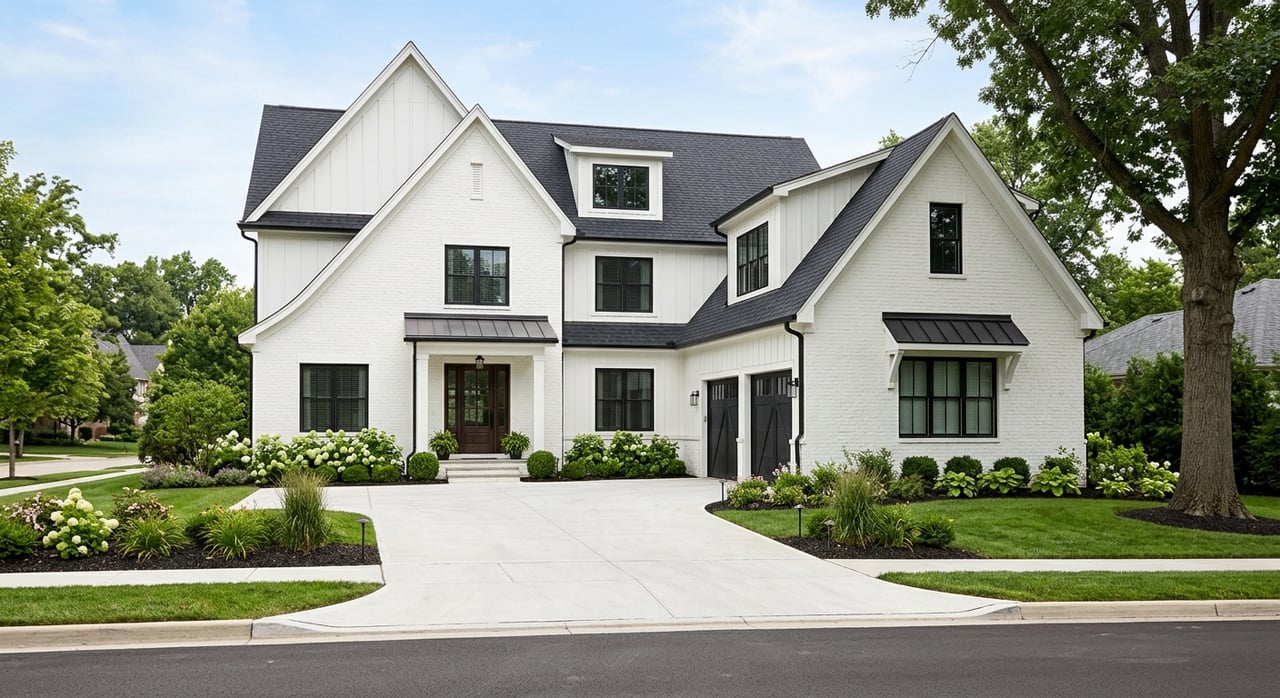
Trying to choose between Cumming and Buford for your next home? You are not alone. Both cities give you access to Lake Lanier, strong suburban convenience, and a wide range of housing options, but they do not live the same day-to-day. If you want to make a confident move, it helps to look past the headlines and compare commute patterns, housing mix, pricing signals, and lifestyle feel. Let’s break it down.
Cumming vs. Buford at a glance
Cumming is the only incorporated city in Forsyth County and sits along Lake Lanier’s western shoreline. Buford is located on the lake’s southern side in Gwinnett County and functions as a larger suburban hub with a different transportation and retail pattern.
At the city level, recent data shows Cumming with a population of 12,494 and Buford with 18,780. Median owner-occupied home values are also fairly close, at $382,900 in Cumming and $368,700 in Buford. On paper, that can make the two markets look very similar at first glance.
Current sales activity adds more nuance. Recent median sale price data puts Cumming at $579,951 and Buford at $604,688, while median days on market sit at 64 days in Cumming and 50 days in Buford. That suggests Buford has recently shown stronger closed-sale momentum, even though listing snapshots can tell a slightly different story depending on the moment and property type.
Commute access can shape your choice
For many buyers, the real difference between Cumming and Buford starts with the roads you will use most often.
Why Cumming fits GA 400 commuters
Cumming’s road network is closely tied to Georgia 400. The city’s planning documents identify GA 400 as the most important road in the city and county, with supporting corridors including Canton Highway, Buford Highway/SR 20, Main Street/Pirkle Ferry Road, Veterans Memorial Boulevard, and Dahlonega Street.
If your work, family, or routine often pulls you along the GA 400 corridor, Cumming may feel more intuitive. Average commute time in Cumming is 28.4 minutes, but for many buyers the route matters more than the number itself.
Why Buford fits I-85 and I-985 access
Buford is more oriented toward I-85 and I-985. The city highlights those highways, along with Buford Highway and Peachtree Industrial Boulevard, as major transportation links. Buford also notes access to Gwinnett County Transit and MARTA rail connections.
Buford’s mean commute time is 27.5 minutes, which is close to Cumming’s average. That is why your preferred highway system may matter more than a one-minute difference in citywide data.
Housing options feel different in each city
Both cities offer detached homes, but the overall housing pattern is not exactly the same.
Cumming leans toward detached homes
Cumming’s long-range planning still centers heavily on detached single-family neighborhoods at lower densities. At the same time, the city allows for duplexes, townhouses, apartments, condominiums, and mixed-use development.
That means you can find variety, but the overall feel still leans more traditional and suburban. Recent and ongoing development examples in Cumming include single-family homes, townhomes, apartments, and condos, showing that the city continues to broaden its housing mix over time.
Buford shows a more mixed core
Buford’s planning framework puts more emphasis on downtown integration and managed growth. In its downtown character area, the city calls for residential units alongside offices, restaurants, shops, and entertainment uses. Townhomes and other medium-density housing are intended to be part of that core.
If you want a more mixed-use setting with a stronger downtown residential component, Buford may stand out. If you picture a more classic detached-home environment, Cumming may feel like the closer match.
Price signals need context
Comparing price between Cumming and Buford is not as simple as picking one number.
Recent median sale price data shows Cumming at $579,951, down 11.4% year over year, and Buford at $604,688, up 36.3% year over year. At the same time, current median listing price snapshots show Cumming at $650,000 and Buford at $560,000.
The takeaway is not that one city is always more expensive. It is that asking prices, closed prices, and pace of sale can point in different directions depending on timing. Neighborhood, home age, lot size, lake proximity, and property type can all change the picture quickly.
County context matters too
Forsyth County and Gwinnett County do not always feel the same in the broader market. Forsyth County’s median owner-occupied home value is $550,400, while Gwinnett County’s is $380,900.
That broader county context helps explain why many buyers perceive the Forsyth side as a higher-price tier, even though city-level figures for Cumming and Buford can appear much closer together. If you are comparing homes across both areas, it helps to review specific neighborhoods rather than rely only on city averages.
Future growth may affect your timing
If you are thinking long term, future supply and development patterns matter.
Cumming is planning for continued growth
Cumming’s long-range plan projects housing units rising from 2,992 in 2022 to 5,846 in 2042. That points to continued residential growth and expansion across multiple housing types.
For buyers, that can mean more future inventory and evolving neighborhood patterns. It can also mean that today’s decision should include how comfortable you are with ongoing development nearby.
Buford emphasizes managed growth
Buford’s current planning framework describes a shift from accelerated residential growth to managed growth. Rather than rapid outward expansion, the city places more focus on downtown infill and a more intentional pattern of development.
If you prefer a market that signals a steadier, more managed approach, Buford may align with that goal. If you are comfortable with a city that is still adding a meaningful amount of housing over time, Cumming may offer the kind of growth story you want.
Lifestyle and amenities differ day to day
Because both cities touch the Lake Lanier story, it is easy to assume they offer the same lifestyle. In reality, each one has its own rhythm.
What everyday life can feel like in Cumming
Cumming puts a strong focus on Lake Sidney Lanier access and outdoor recreation. The city highlights Highway 400 North and Exit 14 as a path to lake-oriented lodging and recreation, while Market Place Boulevard connects toward Mary Alice Park Road, where you can find beaches, pavilions, and boat ramps.
The city also points to the Cumming City Center, a roughly 75-acre destination with shops, restaurants, trails, green space, and the Lou Sobh Amphitheater. Other notable amenities include the Cumming Fairgrounds and the Aquatic Center.
Outdoor access is another major part of the picture. Sawnee Mountain Preserve, near downtown Cumming, includes more than six miles of trails across 963 acres and is described by Forsyth County as the county’s largest passive park.
What everyday life can feel like in Buford
Buford’s amenity mix leans more toward a downtown-and-retail combination. Official city information highlights a historic downtown district with restaurants, shops, and galleries, along with access to Lake Lanier, Buford Dam, lake parks, and related recreation.
Buford also stands out for the Mall of Georgia, which the city describes as offering more than 2 million square feet of shopping and entertainment. Recreation and event spaces such as Buford City Park and the Buford Arena add to the city’s activity base.
School-zone research should stay specific
If schools are part of your move, this is an area where citywide assumptions can lead you off course.
Forsyth County Schools reports serving more than 54,000 students across 42 schools. Buford City Schools is a separate city district that serves students residing in the City of Buford.
That difference makes neighborhood-level research especially important. Instead of comparing the cities in broad terms, it is smarter to verify the exact school zone attached to any home you are considering.
Which city may fit you better?
There is no one-size-fits-all answer, but there are clear patterns that can help you narrow the field.
Cumming may fit you better if you want:
- A Forsyth County address
- Commute patterns tied to GA 400
- A housing base that leans more detached single-family
- Easy access to Lake Lanier and trail-oriented recreation
- A suburban feel with ongoing residential growth
Buford may fit you better if you want:
- Access oriented around I-85 and I-985
- A larger retail and dining hub
- A historic downtown setting
- More mixed downtown housing patterns
- A city planning approach focused on managed growth and infill
The smartest next step is local, not just citywide
City comparisons are useful, but they only get you so far. The real answer usually comes down to the details of specific neighborhoods, including lot sizes, HOA structure, home age, property condition, lake access, and commute pattern.
That is where a guided home search makes a big difference. A clear side-by-side look at homes in Cumming and Buford can help you spot which market actually fits your budget, your routine, and the kind of lifestyle you want to build.
If you are weighing both cities and want practical guidance without the overwhelm, connect with PURE Real Estate Solutions. The team can help you compare neighborhoods, narrow your options, and move forward with clarity.
FAQs
Is Cumming or Buford more expensive for homebuyers?
- It depends on whether you are looking at listing prices, recent sale prices, or county-level context. Recent sale data shows Buford slightly higher, while listing snapshots show Cumming higher, so the answer often comes down to neighborhood and property type.
Is Cumming or Buford better for commuting in North Georgia?
- Cumming is generally the better fit if your routine depends on GA 400, while Buford is usually more convenient if you prefer I-85 or I-985 access.
Does Cumming or Buford have better access to Lake Lanier?
- Both offer access to Lake Lanier, but Cumming emphasizes areas such as Mary Alice Park and lake-oriented recreation near GA 400, while Buford highlights access tied to Lake Lanier, Buford Dam, and lake parks.
Are there different housing styles in Cumming and Buford?
- Yes. Cumming still leans more toward detached single-family neighborhoods, while Buford’s planning framework places more emphasis on mixed-use and townhome-style development in and around its downtown core.
Should you compare schools citywide in Cumming and Buford?
- No. School-zone research should be done property by property because Forsyth County Schools and Buford City Schools serve different areas and not every home will fall into the same attendance pattern.
Is Cumming or Buford better for buyers who want shopping and dining nearby?
- Buford may appeal more if you want a larger retail and dining hub, including its historic downtown and the Mall of Georgia, while Cumming may appeal more if you want a mix of shopping, recreation, and outdoor access centered around the City Center and Lake Lanier amenities.